
In ventilation, cooling, air handling, and industrial applications, fans and blowers are two very common devices. They may look similar and are often confused with each other. However, they differ significantly in structure, working principle, pressure output, and usage scenarios. Understanding the differences can help users choose the right product based on their specific needs.

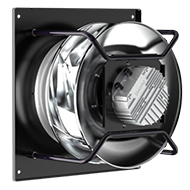
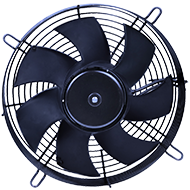
A fan is a device that uses a rotating impeller to move air. It is mainly used for high air volume and low-pressure scenarios, such as indoor ventilation, cooling, and home appliances.
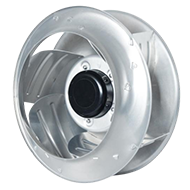
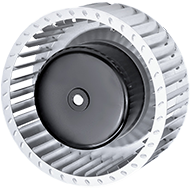
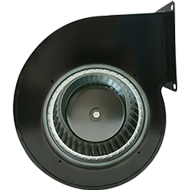
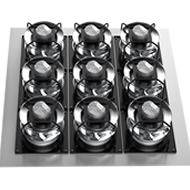
A blower fan is a device that provides medium pressure to push air or other gases. It produces higher pressure than a fan and is used in environments that require airflow resistance, such as industrial transport, combustion air supply, and dust removal systems.

● Fans: Fans move air by rotating blades that generate centrifugal or axial airflow. Common types include axial fans and centrifugal fans.
● Blowers: Blowers use high-speed rotating impellers to compress air and discharge it at higher pressure. The airflow usually gains significant kinetic energy and pressure, making them suitable for gas transport or overcoming duct resistance.
- Do you need high air pressure?
- Is the delivery distance long?
- Does the system have high resistance?
- Is energy efficiency or noise control a priority?
If the pressure requirement is low, a fan is a more economical and energy-saving choice. For applications requiring higher pressure or needing to overcome significant resistance, a blower is the better option.
As a professional provider of fan solutions, Seemtek offers a wide range of industrial fans and blowers to meet the needs of different industries. For more information, visit our official website or contact us for customized recommendations.
 EN
EN
 AR
AR CS
CS NL
NL FR
FR DE
DE EL
EL HI
HI IT
IT KO
KO PL
PL PT
PT RU
RU ES
ES ID
ID LT
LT SK
SK SL
SL UK
UK VI
VI HU
HU TH
TH TR
TR MS
MS ZU
ZU XH
XH BN
BN EO
EO ML
ML TE
TE JA
JA RO
RO MY
MY IW
IW HR
HR SR
SR FI
FI DA
DA SV
SV TG
TG NE
NE LB
LB KM
KM
