
Location: A precision equipment manufacturing facility
Scope: Over 300 Trane Air Handling Units (AHUs)
Installation year: 2009 (over 15 years in operation)
Workshop types: Constant-temperature assembly workshop, precision inspectionworkshop, precision machining workshop, heat treatment workshop, paintingworkshop, and logistics workshop
For any industrial facility, aging air handling units bring a familiar andcostly set of problems: rising electricity bills, degrading equipmentperformance, mounting maintenance pressure, and an urgent need for effectivecost control. Yet many hesitate, caught between the high cost of completeequipment replacement and the inefficiency of maintaining the status quo. Thiscase study offers a replicable path forward.

Before any retrofit, the SEE-ECOFLOW engineering team followed a criticalprinciple: never assume savings are possible without real measurements. A fulldiagnostic assessment was conducted to identify the actual operating conditionof each AHU, significantly reducing project risk and ensuring that the upgradedsystem would enter stable operation immediately upon startup.
1. The original fan system showed poor static pressure efficiency, far belowacceptable levels.
2. Belt-driven transmission incurred substantial power losses and offered nospeed regulation.
3. Continuous full-power operation resulted in massive energy waste.
Data provided the foundation for both client confidence and subsequentequipment selection.

With the diagnostic data in hand, the engineering team proceeded to selectthe optimal replacement solution based on matching performance to actualdemand.
Final configuration (using AHU No. 6 as an example):
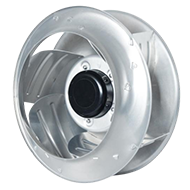
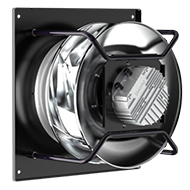
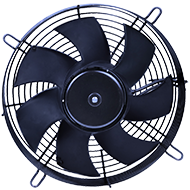
● Model: A3E-3A560-Y8-65 EC fan
● Quantity: 4 units
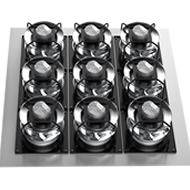
● Arrangement: Array installation to form an "air wall"
1. Operating point determined by original airflow (30,032 m³/h) and staticpressure (634 Pa).
2. Four units installed in parallel to meet peak demand while enablinguniform low-speed operation at partial load, further improving energysavings.
3. Return on investment (ROI) assessment confirmed the solution would achievepayback within 2–3 years.

The greatest challenge in any retrofit of a live factory is avoidingproduction downtime. The modular design of EC fans proved essential. The fullretrofit of a single AHU was completed in just six hours.
"We thought production would have to stop for a day or two, but it was donein a single morning. Plug and play—perfectly seamless."
— Plant Operations Manager

After the retrofit, the engineering team re measured the same AHU (No. 6) toverify results.
| Measurement | Power Consumption | Annual Energy Cost |
| Before retrofit | 15.68 kW | ≈ RMB 106,000/year |
| After retrofit | 7.49 kW | ≈ RMB 51,000/year |
Per unit annual savings: RMB 55,000
Entire facility annual savings (300 AHUs): RMB 16.5 million/year
Note: These figures represent full load operation. Under temperature controlmode, the EC fans offer an even wider speed regulation range, achieving very lowpower consumption during partial load.
1. Lower maintenance costs — no more belt replacements, reduced inspectionfrequency, and zero need for ongoing belt tensioning adjustments.
2. More precise temperature and humidity control — enhancing product qualityassurance.
3. Redundant design — the fan wall configuration ensures long termoperational stability even if an individual unit requires service.
4. Reduced noise levels — improving the workshop environment.
The biggest pitfall in any AHU retrofit is assuming savings are possiblewithout real measurements. This data-first approach reduces risk and ensures theupgraded system starts up and stays stable immediately.
● AHUs in operation for 8–10 years or more, with significant efficiencydegradation
● Existing fans use belt driven transmission and require frequentmaintenance
● No speed regulation capability — units run at full power year round
● Existing building automation system (BAS) or plans for intelligent controlupgrades
For such facilities, the retrofit model outlined here is directly applicableand repeatable.
Energy retrofitting is not a cost; it is an investment — one that has alreadybeen validated across multiple industrial installations.
If your facility is ready to reduce operational costs, lower carbonemissions, and extend the useful life of its HVAC assets, the SEE-ECOFLOW teamoffers a complete AHU and cooling tower retrofit solution [4†L5-L8]. Frominitial diagnostic assessment through engineering design, modular EC fanimplementation, and post retrofit performance verification, our precisionretrofit approach maximizes the potential of your existing assets with minimalcapital expenditure and no prolonged shutdowns. Contact the SEE-ECOFLOW team toexplore how this proven, replicable solution can drive measurable savings foryour facility.
 EN
EN
 AR
AR CS
CS NL
NL FR
FR DE
DE EL
EL HI
HI IT
IT KO
KO PL
PL PT
PT RU
RU ES
ES ID
ID LT
LT SK
SK SL
SL UK
UK VI
VI HU
HU TH
TH TR
TR MS
MS ZU
ZU XH
XH BN
BN EO
EO ML
ML TE
TE JA
JA RO
RO MY
MY IW
IW HR
HR SR
SR FI
FI DA
DA SV
SV TG
TG NE
NE LB
LB KM
KM